

Net Weight Filling Machine: High-Accuracy Weighing Filler for Variable-Density & High-Value Liquids
2026-08-10 09:00:53
admin
0
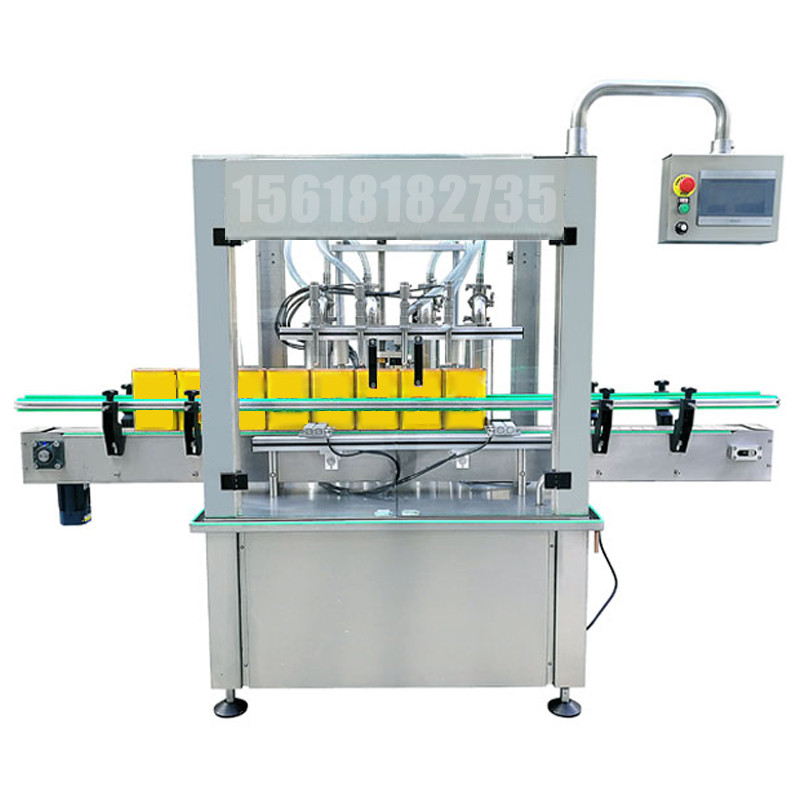
Our existing SEO machinery library covers gravity, overflow, vacuum, peristaltic, gear lobe, piston volumetric, and 3-in-1 monoblock bottling systems, focusing on fixed-volume, level-based, shear-free, and integrated bottling solutions for standardized liquid packaging. To deliver completely unique, non-repetitive content and fill a high-value industrial SEO gap, this authoritative guide elaborates exclusively on net weight filling machines — precision weighing-based filling equipment designed for high-value liquids, variable-density fluids, and large-capacity packaging scenarios where traditional volumetric fillers fail to deliver stable accuracy. Aligned with Google E-E-A-T principles, this article targets chemical manufacturers, edible oil processors, lubricant producers, and agrochemical enterprises struggling with density fluctuation errors, material waste, and non-compliant net content labeling.
Most conventional liquid filling machines adopt volumetric metering logic, calculating filling quantity based on fixed liquid volume. This method works perfectly for stable, fixed-density water-based liquids but exposes fatal accuracy flaws for temperature-sensitive, concentration-variable, and high-value industrial liquids. Liquid density changes with ambient temperature, batch concentration differences, and material aging, leading to obvious weight deviations in volumetric filling. Global industrial packaging data shows that over 60% of net content inspection failures and high-value material waste in bulk liquid packaging stem from volumetric filling errors caused by density fluctuations. Net weight filling machines subvert volumetric measurement and adopt real-time electronic weighing technology to guarantee accurate finished product weight, becoming the most reliable compliance-grade equipment for high-value liquid industrial packaging worldwide.
Critical Limitations of Volumetric Fillers for Industrial Liquids
Piston, flow meter, gravity, and lobe pumps all rely on fixed-volume metering. For industrial and edible liquids with variable physical properties, volumetric filling brings unavoidable quality risks and economic losses:
1. Severe Accuracy Deviation From Density Fluctuation
Edible oil, lubricants, chemical solvents, and glycerin feature variable density affected by temperature and batch concentration. A 1°C temperature change can cause measurable density deviation, resulting in overfilling or underfilling in volumetric filling. Long-term batch production leads to unstable net content and inconsistent product quality.
2. Huge Waste of High-Value Raw Materials
To avoid underfilling and meet regulatory standards, most manufacturers set volumetric fillers with excessive filling margins. For high-priced lubricants, essential oils, and industrial chemical liquids, over-filling margins cause massive long-term raw material waste, severely compressing corporate profit margins.
3. Non-Compliant Net Content Labeling
Industrial and food liquid products have strict net weight regulatory standards. Volumetric filling cannot adapt to real-time density changes, easily causing unqualified batches with insufficient net weight, leading to market inspection penalties, product recalls, and brand reputation damage.
4. Poor Adaptability for Large-Capacity Packaging
For 5L, 20L, 50L, and 200L large barrel packaging, tiny volumetric errors will be magnified exponentially. Traditional fillers have extremely poor large-scale weighing stability and cannot meet precise packaging requirements for bulk industrial liquid products.
5. Manual Recalibration & Frequent Downtime
Manufacturers need to repeatedly recalibrate filling parameters with temperature and batch changes, requiring frequent production shutdowns. Frequent debugging reduces production efficiency and increases manual operation costs.
Traditional Accuracy Compensation Methods & Their Defects
Enterprises using volumetric filling for variable-density liquids usually adopt passive compensation measures, which cannot fundamentally solve accuracy problems and bring hidden risks:
Fixed Margin Overfilling: Reserve extra filling volume to avoid underweight, resulting in sustained waste of high-value raw materials and reduced profit margins.
Frequent Manual Sampling & Calibration: Arrange special personnel for weight sampling and parameter adjustment, relying on manual experience with delayed response and unstable accuracy.
Workshop Constant Temperature Control: Stabilize liquid density via temperature adjustment, requiring high workshop transformation costs and energy consumption.
Post-Filling Manual Weight Correction: Supplement or reduce liquid manually after filling, with low efficiency, high labor costs, and inability for standardized mass production.
Working Principle & Core Net Weight Filling Technology
Professional net weight filling machines adopt exclusive real-time dynamic weighing + dual-speed coarse/fine filling + automatic density adaptation + closed-loop weight feedback + anti-drip quantitative cutoff core technology, completely abandoning traditional volumetric filling logic and realizing error-free precision filling for all variable-density high-value liquids:
Different from volumetric equipment that fixes filling volume, the core of net weight filling is weight-based closed-loop control. Each filling station is equipped with a high-precision digital weighing sensor. Before filling, the system automatically zeros the empty bottle weight; during filling, the sensor monitors the liquid weight in real time and transmits data to the PLC system dynamically.
The equipment adopts dual-speed filling mode to balance efficiency and accuracy: high-speed coarse filling quickly completes 90% of the filling volume to ensure production efficiency, then switches to low-speed fine filling for precise weight stacking. When the liquid weight reaches the preset standard value, the system instantly cuts off the liquid supply to achieve accurate weight locking.
The intelligent weight feedback system automatically offsets density and temperature fluctuations. No matter how liquid density changes in different batches and environments, the final finished product weight remains consistent, completely eliminating batch weight deviation caused by physical liquid property changes. The built-in anti-drip and anti-splash nozzle design effectively avoids liquid dripping and weight loss during filling and station switching.
All material contact parts adopt corrosion-resistant 304/316L stainless steel, adapting to acidic, alkaline, oily, and solvent-based industrial liquids. The high-precision weighing sensor supports long-term stable operation with anti-interference performance, suitable for complex workshop production environments. The system automatically records filling weight data for each batch, supporting production traceability and meeting industrial quality management standards.
Unique Core Advantages of Net Weight Filling Machines
Real-time weighing closed-loop filling technology brings irreplaceable precision and economic advantages for high-value variable-density liquid production, thoroughly solving all pain points of volumetric filling equipment:
1. Zero Error Adaptation to Density & Temperature Changes
Weight-based metering is not affected by liquid density, temperature, and concentration fluctuations. It maintains consistent finished product net weight in all environments, realizing 100% qualified batch net content and avoiding regulatory risks.
2. Eliminate High-Value Raw Material Waste
No need for excessive overfilling margins. Precise weight locking realizes zero-overfill filling, saving 1%–3% of high-value raw materials annually. For bulk industrial liquid production, the cost-saving benefit is extremely significant.
3. Ultra-High Accuracy for Large-Capacity Packaging
It perfectly adapts to 1L to 200L large barrel and jerrycan packaging. No error magnification occurs in large-volume filling, solving the long-standing accuracy problem of industrial bulk liquid packaging.
4. Automatic Intelligent Operation & Low Labor Dependence
Real-time data monitoring, automatic parameter adaptation, and one-key batch switching eliminate frequent manual calibration and sampling work. It greatly reduces labor costs and avoids human operation errors.
5. Complete Production Data Traceability
The system automatically stores batch filling weight data, supporting quality inspection, production traceability, and standardized factory management, meeting strict industrial and food safety supervision requirements.
6. Strong Liquid Compatibility
It stably fills low-viscosity water liquids, medium-viscosity oils, and corrosive chemical solvents, covering almost all high-value industrial and edible liquid types with wide application scenarios.
Professional Industrial Application Scenarios
Net weight filling machines fill the market gap of volumetric fillers unable to adapt to variable-density high-value liquids, becoming the designated compliance-grade equipment for bulk high-precision liquid packaging in multiple core industries:
Edible Oil & Food Industry: Peanut oil, soybean oil, olive oil, blended edible oil, syrup, and high-value food liquids, ensuring compliant net weight and reducing edible oil waste.
Lubricant & Petrochemical Industry: Engine oil, gear oil, hydraulic oil, lubricating grease liquid, and industrial fuel oil, adapting to temperature-sensitive oil density changes and realizing precise weight packaging.
Fine Chemical Industry: Industrial solvents, glycerin, alcohol solutions, chemical additives, and environmentally friendly reagents, avoiding batch weight deviation caused by concentration differences.
Agrochemical Industry: Pesticide liquid, fertilizer solution, and agricultural additives, meeting strict net content standards for agrochemical products and improving market compliance.
Daily Chemical Industry: High-value essence raw materials, concentrated detergent solutions, and premium care liquids, maximizing raw material utilization and improving corporate profits.
7 Common Misconceptions About Net Weight Filling Machines
Most industrial liquid manufacturers have cognitive misunderstandings about net weight filling technology, leading to persistent accuracy problems and unnecessary material waste in production:
Myth 1: Volumetric fillers can replace net weight fillers with calibration. Manual calibration can only fix static errors and cannot offset real-time density and temperature dynamic fluctuations.
Myth 2: Net weight filling speed is slower than volumetric filling. Dual-speed coarse/fine filling design balances accuracy and efficiency, with comprehensive output fully meeting industrial mass production needs.
Myth 3: Net weight sensors are easily disturbed and unstable. Industrial anti-interference weighing sensors adapt to complex workshop vibration and temperature environments with long-term stable accuracy.
Myth 4: Only high-precision products need net weight filling. All high-value and large-capacity liquid products require net weight filling to reduce waste and avoid compliance risks.
Myth 5: Net weight equipment is difficult to operate. Intelligent PLC one-key operation and automatic adaptation reduce manual intervention, with simpler daily operation than volumetric equipment.
Myth 6: Small-batch production does not need net weight filling. Small-batch high-value materials suffer higher unit waste from volumetric errors, making net weight filling more cost-effective.
Myth 7: Volumetric filling has higher accuracy for small bottles. Net weight filling maintains higher consistency for all container specifications, eliminating density-induced deviation fundamentally.
High-Value Liquid Precision Packaging Upgrade Solution
For manufacturers troubled by density-induced weight deviation, high raw material waste, non-compliant net content, and frequent parameter calibration downtime caused by traditional volumetric filling equipment, net weight filling machines provide the only fundamental precision upgrade solution. Abandon outdated volume-based metering modes and passive error compensation methods. Adopt real-time dynamic weighing closed-loop filling technology to realize zero-error compliant production, maximize raw material utilization, and enhance long-term corporate profitability and brand compliance.
Industry Verified ROI & Production Data
Industrial liquid packaging industry data shows that professional net weight filling machines reduce high-value raw material waste by 95%, improve batch net content qualification rate to 100%, and cut manual calibration labor costs by 80%. For edible oil, lubricant, and fine chemical enterprises, the equipment investment can be fully recovered within 2–4 months through saved material costs, bringing sustained and stable economic benefits for long-term production.
Modern compliant and cost-effective high-value liquid packaging relies on professional net weight weighing filling technology, not traditional volumetric filling methods.
Conclusion
Traditional volumetric filling equipment has inherent unsolvable defects in high-value variable-density liquid production: fixed-volume metering cannot adapt to dynamic changes in liquid temperature and density, resulting in unavoidable weight deviation and raw material waste. Passive compensation measures such as overfilling margins and frequent calibration only relieve superficial problems, cannot eliminate compliance risks, and restrict enterprise profit growth. Professional net weight filling machines subvert volumetric filling logic and adopt exclusive real-time dynamic weighing + dual-speed graded filling + automatic density adaptation + closed-loop weight feedback + full-batch data traceability integrated technology. It perfectly solves core industry pain points including inaccurate filling weight, high material waste, non-compliant net content, and low production efficiency. For global edible oil, lubricant, fine chemical, and agrochemical manufacturers pursuing compliant, high-precision, and cost-saving liquid packaging, net weight filling machines are the most professional, stable, and irreplaceable industrial-grade precision filling solution.


